
what is seo ? A Beginner's Guide
SEO (Search Engine Optimization) is the practice of improving a website so that it appears higher in search results on platforms like Google, Bing, and modern AI-powered tools such as ChatGPT, Gemini, and Perplexity.

The main goal of SEO is to help search engines understand your website and show it to people who are actively looking for information, products, or services related to your business.
For example, if you own a bakery in Jaipur and someone searches for “best chocolate cake near me” or “birthday cake shop in Jaipur,” effective SEO can help your website appear in those search results. This allows potential customers to discover your business without relying entirely on paid advertisements.
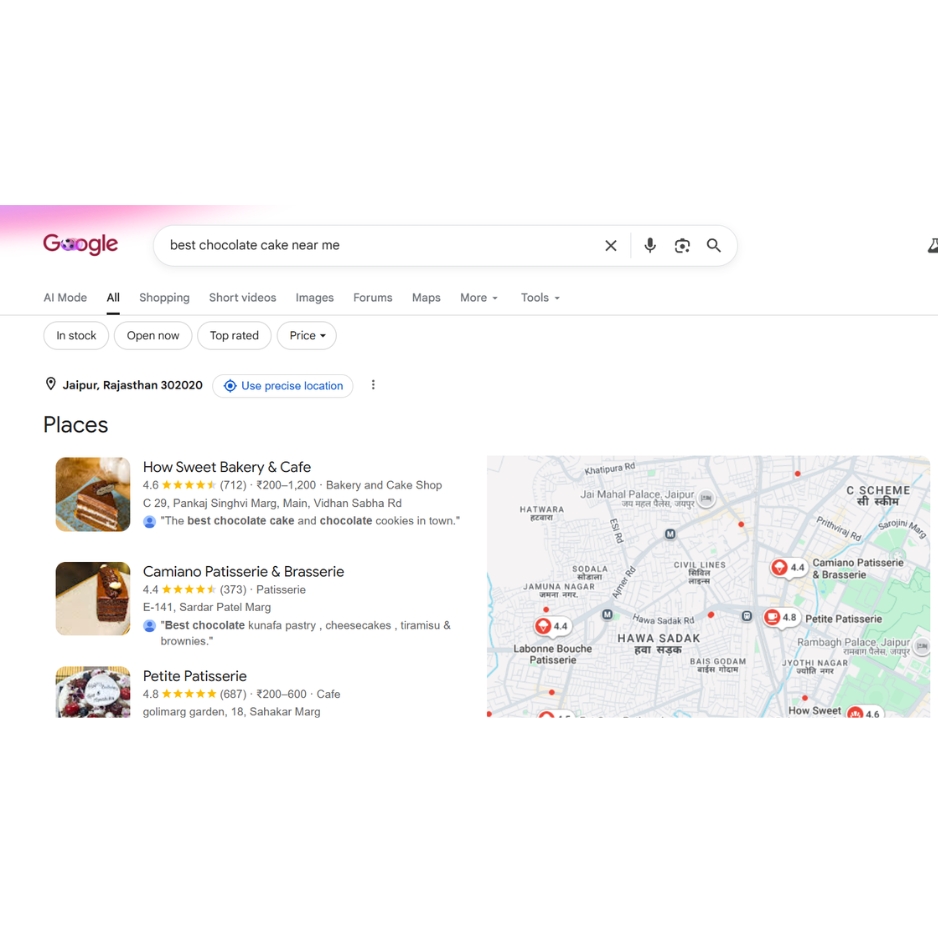
This example illustrates how SEO helps local businesses appear in search results when users search for nearby products or services. If a bakery’s website is properly optimized, Google can display it to potential customers searching for cakes in the area. This boosts visibility and attracts more local customers without the need for paid ads.
Many people think SEO is only about getting higher rankings on Google. In reality, SEO is about providing the right information to the right audience at the right time. It helps businesses connect with users who are already searching for solutions, making it one of the most valuable digital marketing strategies.
Today, search behavior is changing rapidly. People use search engines, AI assistants, voice search, and recommendation platforms to find answers. A well-optimized website has a better chance of appearing across these different channels, increasing visibility and brand awareness.
SEO involves improving several important aspects of a website, including:
– Content Quality (how useful and relevant your content is)
– Website Structure (how pages are organized and connected)
– User Experience (how easy the website is to use)
– Page Speed (how quickly pages load)
– Backlinks (links from other websites that build trust and authority)
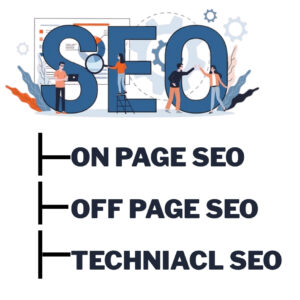
SEO is generally divided into three main categories:
- On-Page SEO: Focuses on optimizing the content and elements on your website, such as keywords, meta tags, headings, and images.
- Off-Page SEO: Involves activities outside your website, like building quality backlinks and social media engagement to increase your site’s authority.
- Technical SEO: Deals with the backend aspects of your site, including site speed, mobile-friendliness, crawlability, and security.
A successful SEO strategy combines all three to improve website performance, search visibility, and achieve long-term growth.
Search engines analyze these factors to determine which websites deserve higher rankings. Websites that provide accurate information, a better user experience, and strong authority are more likely to perform well in search results.
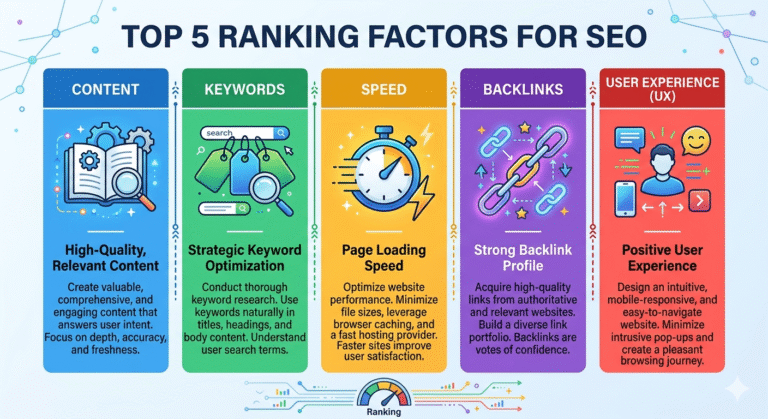
Search engines use various signals to determine which pages rank higher. Key ranking factors include:
- Content quality: Clear, valuable, and relevant information.
- Keyword relevance: Matching the search intent with appropriate keywords.
- Website speed: Fast-loading pages improve user satisfaction.
- Backlinks: Quality links from other trusted websites enhance authority.
- User experience: Easy navigation and mobile-friendliness keep visitors engaged.
Websites that excel in these areas have a better chance of ranking on the first page of search results.
One of the biggest advantages of SEO is organic traffic (visitors who find your website through unpaid search results). Unlike paid advertising, where traffic stops when your budget runs out, SEO can continue generating visitors and leads over the long term.
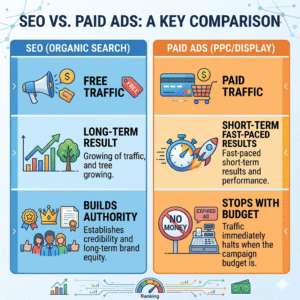
SEO and paid advertising both drive traffic to a website but operate differently:
- SEO: Focuses on earning organic traffic gradually by optimizing the website for search engines, providing sustainable long-term growth.
- Paid advertising: Offers immediate visibility by paying for ads, delivering quick results based on advertising budgets.
Many businesses combine both strategies to balance short-term gains with long-term success.
Whether you run a business website, an online store, or a personal blog, SEO helps improve visibility, attract targeted visitors, build credibility, and support sustainable online growth.
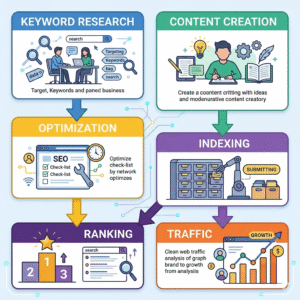
SEO begins with keyword research to identify what people are searching for. Based on this, content is created and optimized around those topics. Search engines then crawl and index the pages. If the content provides value and relevance, it can achieve higher rankings and attract organic traffic over time.
In simple terms, SEO is the process of making your website easier for both people and search engines to understand, helping more users discover your content online.
